


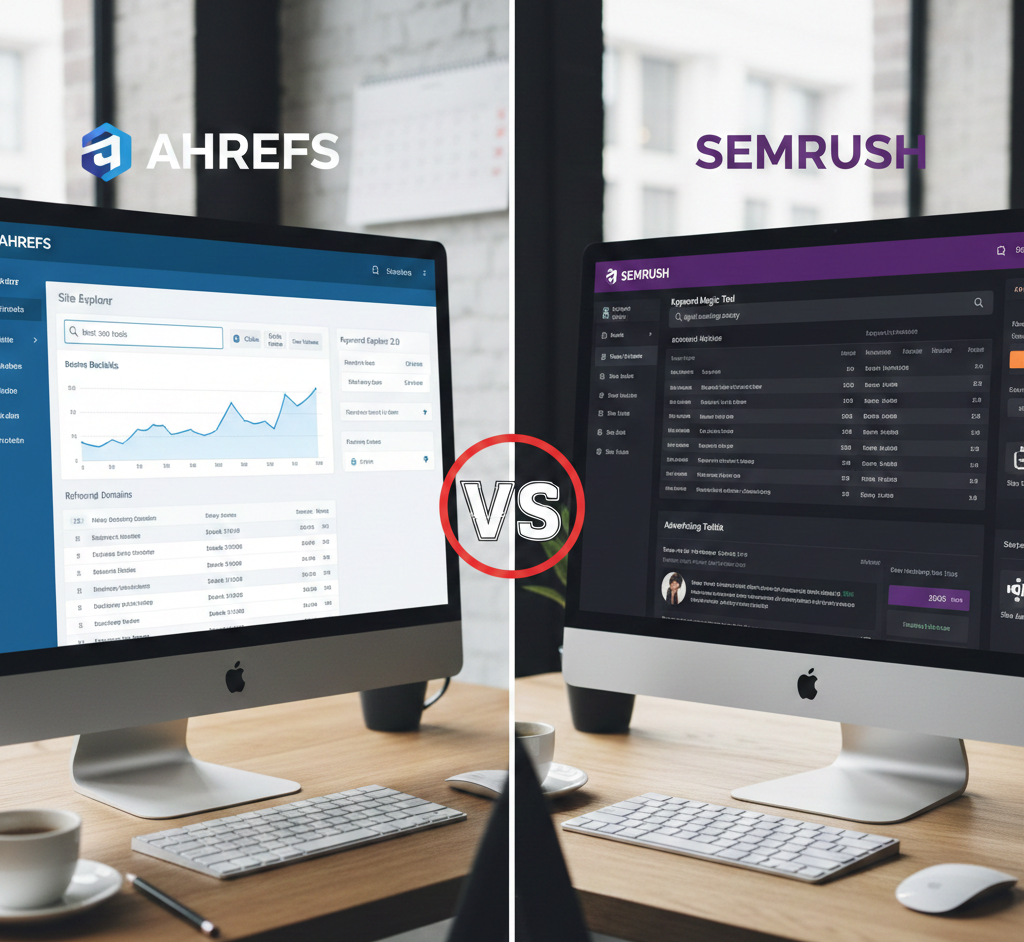
In the fast-moving world of search engine optimization, tools are not just helpful — they are essential. Back in 2018, the SEO industry was fiercely competitive, and two platforms stood at the top Ahrefs vs Semrush 2018 of the battlefield: Ahrefs and Semrush.
If you were building websites, running an agency, managing affiliate projects, or scaling e-commerce stores in 2018, you likely asked the big question:
Ahrefs vs Semrush 2018 — which tool was better?
This in-depth guide explores features, pricing, data accuracy, usability, keyword research, backlink analysis, competitor tracking, and more — all specifically from a 2018 perspective.
Ahrefs vs Semrush 2018: Overview of Both SEO Giants
Before comparing features, let’s understand what each platform was known for in 2018.
- Ahrefs was widely respected for its massive backlink index and powerful link analysis tools.
- Semrush positioned itself as a complete digital marketing suite — offering SEO, PPC, content marketing, and competitor research.
While both tools were powerful, they served slightly different strengths in 2018.
Ahrefs vs Semrush 2018: Company Background and Growth
Ahrefs in 2018
Founded in 2010, Ahrefs had grown rapidly by 2018. It was especially popular among:
- SEO professionals
- Link builders
- Affiliate marketers
- Bloggers
Its crawler was considered second only to Google at the time. In 2018, Ahrefs heavily emphasized backlink tracking and keyword research improvements.
Semrush in 2018
Founded in 2008, Semrush had a broader marketing focus. By 2018, it was popular among:
- Digital marketing agencies
- PPC specialists
- Content marketers
- Enterprise clients
Semrush had positioned itself as an “all-in-one marketing toolkit,” not just an SEO tool.
Ahrefs vs Semrush 2018: Keyword Research Comparison
Keyword research is the backbone of SEO. In 2018, both tools offered strong capabilities — but in different ways.
Ahrefs Keyword Explorer (2018)
Ahrefs introduced a powerful Keyword Explorer with:
- Keyword Difficulty (KD) score
- Click metrics (unique feature in 2018)
- Parent topic analysis
- SERP overview
One major advantage was Ahrefs’ Clicks metric, which showed how many actual clicks a keyword received — not just search volume.
This was revolutionary in 2018 because many keywords had high search volume but low clicks due to featured snippets.
Semrush Keyword Research (2018)
Semrush provided:
- Keyword Magic Tool
- Broad match, phrase match, and related keywords
- PPC data integration
- Keyword variations
- SERP features tracking
Semrush had better keyword database coverage in certain regions, especially for US and European markets.
Verdict: Ahrefs vs Semrush 2018 for Keyword Research
- For click data accuracy → Ahrefs wins
- For PPC and broad keyword expansion → Semrush wins
Ahrefs vs Semrush 2018: Backlink Analysis Battle
Backlinks were king in 2018 — and this is where the real war happened.
Ahrefs Backlink Index (2018)
Ahrefs was famous for:
- Massive backlink database
- Fresh link index
- Referring domains analysis
- Anchor text tracking
- Broken link checker
Many SEO professionals believed Ahrefs had the largest and fastest-updating link index at that time.
Semrush Backlink Tools (2018)
Semrush improved its backlink tools significantly in 2018. It offered:
- Backlink audit
- Toxic score analysis
- Link building tool
- Referring domain reports
However, in pure link discovery power, many experts favored Ahrefs.
Verdict: Ahrefs vs Semrush 2018 for Backlinks
Ahrefs dominated backlink analysis in 2018.
If you were building links, Ahrefs was often the first choice.
Ahrefs vs Semrush 2018: Site Audit Features
Ahrefs Site Audit (2018)
Ahrefs offered:
- Technical SEO analysis
- Crawl reports
- Internal linking issues
- On-page error detection
- Health score
Its interface was clean and easy to understand.
Semrush Site Audit (2018)
Semrush offered:
- Comprehensive site audit
- Structured data checks
- HTTPS issues
- AMP errors
- Technical SEO scoring
Semrush had slightly more advanced technical reporting.
Verdict
For deep technical SEO → Semrush had the edge
For simplicity and clarity → Ahrefs felt cleaner
Ahrefs vs Semrush 2018: Competitor Analysis
Competitor research was a huge factor in 2018 SEO strategies.
Ahrefs Competitor Tools
Ahrefs allowed users to:
- See competing domains
- Analyze top pages
- Discover content gaps
- Compare backlink profiles
Its “Content Gap” tool was particularly powerful.
Semrush Competitor Tools
Semrush offered:
- Organic competitors report
- Paid competitors data
- Traffic analytics
- Position tracking
- Display advertising research
Semrush clearly offered broader competitor insights, especially for PPC.
Verdict
For SEO-only competitor analysis → Ahrefs strong
For complete digital marketing competitor research → Semrush stronger
Ahrefs vs Semrush 2018: User Interface and Ease of Use
Ahrefs UI (2018)
- Clean
- Minimalistic
- Fast loading
- SEO-focused
Ahrefs was loved for its simple dashboard.
Semrush UI (2018)
- Feature-rich
- Slightly complex
- More menus
- Marketing-focused
Semrush sometimes felt overwhelming to beginners.
Verdict
If you preferred simplicity → Ahrefs
If you wanted all-in-one marketing tools → Semrush
Ahrefs vs Semrush 2018: Pricing Comparison
Ahrefs Pricing (2018)
Plans started around $99/month and scaled upward. It did not offer a free trial easily.
Semrush Pricing (2018)
Semrush also started around $99/month, but often offered trial periods.
Semrush had more tiered plans targeting agencies.
Verdict
Pricing was similar. Value depended on your needs.
Ahrefs vs Semrush 2018: Data Accuracy
Data accuracy is crucial.
- Ahrefs was praised for backlink accuracy.
- Semrush was praised for keyword database size.
Neither tool was 100% accurate — but both were industry leaders.
Ahrefs vs Semrush 2018: Content Marketing Tools
Ahrefs Content Features
- Top pages report
- Content gap
- SERP overview
Ahrefs was more SEO-focused.
Semrush Content Marketing Toolkit
Semrush offered:
- SEO Writing Assistant
- Content templates
- Topic research
- Brand monitoring
Semrush clearly led in content marketing features in 2018.
Ahrefs vs Semrush 2018: PPC and Advertising Features
This is where the difference was clear.
- Ahrefs: Minimal PPC data
- Semrush: Full PPC keyword data, ads copies, competitor ads
For paid search marketers in 2018, Semrush was the obvious choice.
Ahrefs vs Semrush 2018: Rank Tracking
Both offered position tracking tools.
Semrush had more detailed location tracking options.
Ahrefs tracking was clean but simpler.
Ahrefs vs Semrush 2018: Which Tool Was Better for Agencies?
Agencies in 2018 often chose Semrush because:
- Client reporting
- PPC insights
- White-label options
Freelancers and affiliate marketers often preferred Ahrefs for link building.
Ahrefs vs Semrush 2018: Pros and Cons Summary
Ahrefs Pros (2018)
- Best backlink index
- Click-based keyword metrics
- Clean UI
- Excellent competitor content analysis
Ahrefs Cons (2018)
- Limited PPC features
- No broad marketing toolkit
Semrush Pros (2018)
- Complete marketing suite
- Strong PPC data
- Technical SEO depth
- Content marketing tools
Semrush Cons (2018)
- Interface complexity
- Backlink index slightly smaller (compared to Ahrefs)
Ahrefs vs Semrush 2018: Final Verdict
In 2018, the answer depended on your needs:
- For backlink analysis and pure SEO power → Ahrefs
- For digital marketing, PPC, and all-in-one features → Semrush
Both tools shaped the SEO landscape in 2018 and pushed the industry forward.
Conclusion: Ahrefs vs Semrush 2018 — Which Should You Have Chosen?
Looking back at 2018, this was not a battle of good vs bad. It was a battle of specialization vs expansion.
- Ahrefs focused deeply on SEO accuracy.
- Semrush expanded into complete digital marketing dominance.
If you were an affiliate marketer in 2018, Ahrefs probably felt like a weapon.
If you were running an agency with SEO + PPC clients, Semrush likely felt like an entire command center.
Ultimately, the Ahrefs vs Semrush 2018 debate reflected the evolution of SEO tools — from single-purpose analyzers to full marketing ecosystems.
READ MORE: TECHBIZZ.CO.UK
