



The Mini 14 is one of the most recognizable semi-automatic rifles produced in the United States. Known for its classic styling, ranch-friendly reputation, and long-standing presence in civilian, law enforcement, and pop culture spaces, the Mini 14 has developed a reputation that stretches far beyond its size.
In this detailed article, we will explore the origins, development, design philosophy, historical evolution, variants, cultural significance, legal considerations, and enduring legacy of the Mini-14. This guide is purely informational and historical in nature, focusing on context and background rather than operational use.
The Origins of the Mini 14
The Mini-14 was introduced in the 1970s by Sturm, Ruger & Co., one of the most well-known firearms manufacturers in the United States. The company was co-founded by Bill Ruger, whose design philosophy heavily influenced the look and function of the Mini-14.
During the late 1960s and early 1970s, there was growing demand for a lightweight, semi-automatic rifle chambered for small-caliber cartridges that could serve farmers, ranchers, sport shooters, and law enforcement agencies. The idea was to create something reliable, compact, and affordable, while maintaining a traditional rifle appearance rather than a modern military aesthetic.
The Mini-14 was introduced in 1973. It quickly became popular due to its familiar styling, moderate recoil, and versatility. Unlike many tactical-style rifles, the Mini-14 resembled classic American sporting rifles, which contributed to its broad appeal among rural gun owners and outdoors enthusiasts.
Design Philosophy Behind the Mini 14
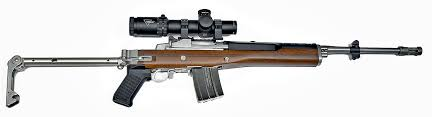
One of the defining characteristics of the Mini-14 is its traditional appearance. It was intentionally designed to resemble classic American rifles rather than contemporary military platforms.
Traditional Aesthetics
The Mini-14 features:
- A wooden stock (in many standard models)
- A compact overall length
- A lightweight frame
- A streamlined, conventional rifle profile
This visual identity distinguished it from other semi-automatic rifles available at the time. It appealed to individuals who preferred a more classic look without sacrificing modern semi-automatic functionality.
Gas-Operated System
The Mini-14 uses a gas-operated system that draws from earlier rifle engineering concepts. The design emphasizes reliability and simplicity. Its internal operating system is robust and designed to function under various environmental conditions.
Compact and Lightweight
As the name suggests, the Mini-14 is smaller than traditional full-sized battle rifles. Its reduced weight and size make it easier to carry in field settings, which contributed to its popularity among ranchers and outdoorsmen.
The Mini 14 and Its Cartridge
Most standard Mini-14 models are chambered for the .223 Remington cartridge and are compatible with 5.56×45mm NATO ammunition (depending on the specific model and configuration). These cartridges are small-caliber, high-velocity rounds commonly used for target shooting, small game hunting, and varmint control.
The choice of this caliber significantly contributed to the Mini-14’s appeal because:
- It offers manageable recoil
- It allows for relatively flat trajectory at moderate distances
- Ammunition has historically been widely available in the United States
This balance of power and control helped solidify the Mini 14 role as a versatile civilian rifle.
Evolution of the Mini 14 Over the Decades
The Mini 14 has undergone multiple design updates and refinements since its introduction.
Early Production Models (1970s–1980s)
The original models from the 1970s featured:
- Wooden stocks
- Blued steel finishes
- Basic iron sights
- Fixed barrel profiles
These early versions established the foundation of the platform’s reputation.
Improvements in Accuracy and Barrel Design
In later decades, the manufacturer introduced modifications aimed at improving consistency and performance. Some newer models feature:
- Heavier barrel profiles
- Enhanced sight systems
- Updated finishes
- Synthetic stock options
These changes were largely in response to user feedback and evolving consumer preferences.
Tactical and Modern Variants
Over time, certain models were introduced with:
- Synthetic stocks
- Accessory rails
- Alternative stock configurations
- Different sighting systems
While the core mechanical operation remained similar, these variations allowed the Mini-14 to adapt to shifting market trends.
The Mini 14 in Law Enforcement
The Mini 14 gained traction with law enforcement agencies, especially during the 1980s and 1990s. It was often chosen because:
- It provided greater accuracy and range than standard-issue handguns.
- It maintained a non-intimidating, traditional appearance.
- It was perceived as less militaristic than other rifle platforms.
Many departments appreciated its familiar ergonomics and straightforward design.
The Mini 14 in Pop Culture
The Mini 14 has appeared in numerous films and television series over the decades. One of the most famous examples is its use in 1980s television, where it was carried by a fictional action character in a popular series.
This exposure significantly boosted public awareness of the rifle and cemented its image as a recognizable firearm in American media. Because of its distinctive silhouette and traditional stock, it became visually associated with certain action tropes.
However, it is important to note that pop culture portrayals often dramatize firearms beyond their real-world context.
Variants of the Mini 14
Over the years, several variations of the Mini 14 have been introduced.
Ranch Rifle Variant
The Ranch Rifle model was developed to better accommodate scope mounting. It included integral scope bases and improved sight systems.
This variant became especially popular among rural landowners and hunters who wanted flexibility for optics.
Mini Thirty
Although technically a different model, the Mini Thirty shares the same design lineage as the Mini 14 but is chambered for a different cartridge. It expanded the platform’s appeal to those seeking alternative calibers.
Target Model
A target-focused variant was also introduced with features intended to enhance precision shooting. These models often featured heavier barrels and adjustable components designed for range use.
The Mini 14 and Hunting
The Mini 14 has been used for:
- Varmint control
- Small to medium game hunting (depending on local regulations)
- Predator management on rural properties
Its relatively lightweight design makes it convenient for extended carry in field environments. However, hunting laws vary by region, and firearm regulations differ widely depending on jurisdiction.
Anyone interested in hunting must consult local laws and wildlife authorities before engaging in any activity.
The Mini 14 and Legal Considerations
Firearm regulations vary significantly between countries and even between states or provinces within a country.
In the United States, the legal status of the Mini 14 depends on:
- State-specific firearm laws
- Magazine capacity restrictions
- Configuration and features
In some jurisdictions, certain versions or configurations may face additional restrictions.
Because laws change frequently, individuals must always consult official government resources or legal professionals to understand current regulations. Responsible firearm ownership includes compliance with all applicable laws and safe storage practices.
Public Perception of the Mini 14
Public perception of the Mini 14 has shifted over time.
Positive Perception
Supporters often describe the Mini 14 as:
- Reliable
- Lightweight
- Classically styled
- Versatile for rural use
Many appreciate its traditional wooden stock and understated appearance.
Criticism
Some critics have debated aspects such as:
- Early-model accuracy concerns
- Cost comparisons to other semi-automatic rifles
- Accessory compatibility
These discussions are common in firearm enthusiast communities and reflect broader debates about design preferences.
Comparing the Mini 14 to Other Rifles
When discussing the Mini 14 in general terms, comparisons are often made to other semi-automatic rifles in similar calibers.
Key differences usually center around:
- Aesthetic design
- Operating system mechanics
- Accessory compatibility
- Price point
- Historical context
Each platform has its own strengths and weaknesses, and preferences often come down to intended use, ergonomics, and personal taste.
Manufacturing and Materials
The Mini 14 is constructed using:
- Steel components
- Hardwood or synthetic stocks (depending on model)
- Gas-operated internal systems
Later production models introduced refinements in machining and barrel construction, reflecting advancements in manufacturing technology.
The Mini 14 in Modern Times
Even decades after its introduction, the Mini 14 remains in production. Its continued presence speaks to:
- Sustained consumer demand
- Brand recognition
- Adaptability to market trends
While newer rifle platforms have gained popularity in recent years, the Mini 14 maintains a loyal following among enthusiasts who appreciate its heritage and styling.
The Mini 14 and Responsible Ownership
Any discussion of firearms must include the importance of responsibility and safety.
Responsible firearm ownership includes:
- Secure storage
- Proper training
- Awareness of local laws
- Respect for safety protocols
- Keeping firearms away from unauthorized users
Firearms are serious tools that require maturity, knowledge, and strict adherence to safety practices. Education and responsible handling are essential components of lawful ownership.
Cultural and Historical Impact of the Mini 14
The Mini 14 reflects a particular era in American firearm design. It bridges:
- Traditional rifle aesthetics
- Modern semi-automatic functionality
- Civilian sporting use
- Law enforcement adoption
It occupies a unique space between historical sporting rifles and more contemporary designs.
Because of its long production history, the Mini 14 represents continuity in an industry that has seen rapid technological change.
Why the Mini 14 Continues to Attract Interest
Several factors explain the platform’s longevity:
- Familiar appearance
- Brand reputation
- Manageable size
- Historical significance
- Wide recognition
For many enthusiasts, it represents a blend of tradition and modernity.
The Future of the Mini 14
As firearm markets evolve, the Mini 14’s future will depend on:
- Consumer preferences
- Legislative changes
- Technological advancements
- Company innovation
Given its decades-long presence, it is likely to remain part of discussions about American rifle design for years to come.
Conclusion: Understanding the Mini 14 in Context
The Mini 14 is more than just a rifle; it is a product of its time, a reflection of design philosophy, and a symbol of a particular chapter in American manufacturing history.
From its introduction in the 1970s to its modern variants, the Mini 14 has maintained a distinct identity characterized by:
- Traditional styling
- Semi-automatic function
- Civilian and law enforcement use
- Cultural visibility
Understanding the Mini 14 requires viewing it through historical, cultural, legal, and technological lenses rather than focusing solely on mechanics.
As with all firearms, discussions about the Mini 14 should emphasize responsibility, safety, and lawful ownership. Knowledge, maturity, and respect for regulations are essential components of any conversation surrounding such equipment.
Whether viewed as a ranch rifle, a collectible, or a piece of firearms history, the Mini 14 remains a noteworthy example of American industrial design and enduring brand legacyREAD MORE: TECHBIZZ.CO.UK
