



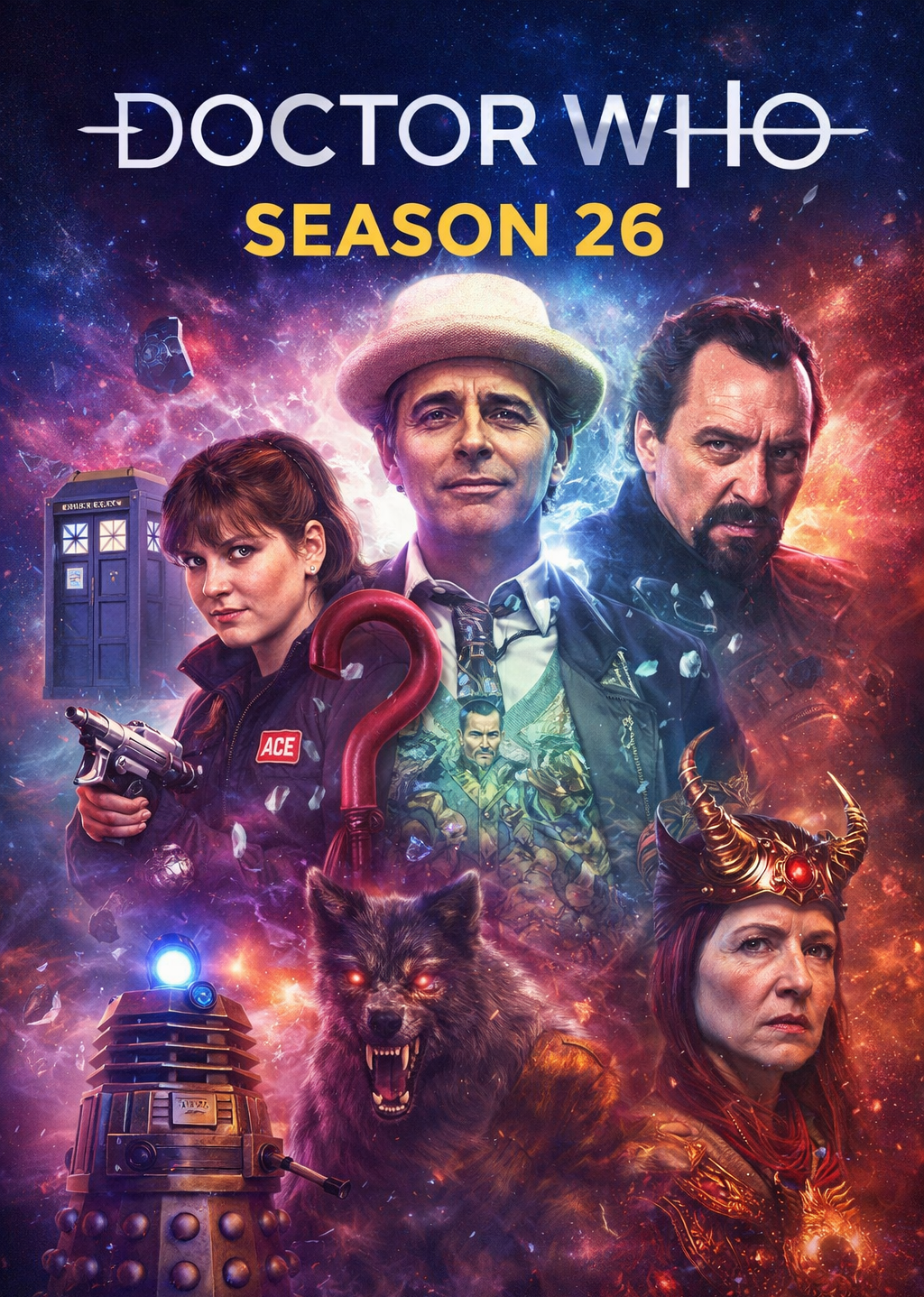
Few television series in history have demonstrated the resilience, reinvention, and regeneration power of Doctor Who. Since its debut on the BBC in 1963, the show has transformed through decades of cultural shifts, creative revolutions, and audience expectations. Yet among its many eras, Doctor Who Season 26 stands out as one of the most remarkable, emotionally charged, and thematically daring chapters in the classic run.
Broadcast in 1989, Doctor Who Season 26 became the final season of the original series before its long hiatus. What makes this season extraordinary is not merely its historical placement but its creative ambition. With bold storytelling, morally complex narratives, and some of the Seventh Doctor’s most powerful character development, this season elevated the show into darker, more sophisticated territory.
In this comprehensive exploration, we will journey through the background, stories, themes, performances, legacy, and lasting impact of Doctor Who Season 26, analyzing why it remains one of the most respected seasons in the franchise’s long history.
The Context Behind Doctor Who Season 26
By the late 1980s, Doctor Who was facing uncertain times. Ratings had fluctuated, production budgets were tight, and the BBC was reassessing its programming direction. The show had already endured a controversial hiatus in 1985 and increasing criticism regarding its tone and relevance.
The Sixth Doctor’s era, portrayed by Colin Baker, had divided fans. The transition to the Seventh Doctor, played by Sylvester McCoy, marked an attempt to refresh the series’ tone. Initially presented as quirky and clownish, McCoy’s Doctor gradually evolved into a darker, more manipulative, chess-master-like figure.
Under script editor Andrew Cartmel, the show embraced complex themes and mysterious mythology, often referred to by fans as the “Cartmel Masterplan.” The idea was to restore intrigue to the Doctor’s origins, subtly suggesting he was far more than just another Time Lord.
By the time Doctor Who Season 26 began airing, the creative team had found its confidence. What followed was a four-story arc that pushed boundaries and left a lasting mark on the franchise.
The Structure of Doctor Who Season 26
Unlike earlier seasons filled with numerous serials, Doctor Who Season 26 consisted of four extended stories:
- Battlefield
- Ghost Light
- The Curse of Fenric
- Survival
Each story contained three episodes (except Battlefield, which had four), creating a tightly focused season with cinematic pacing and emotional depth.
Battlefield in Doctor Who Season 26
Battlefield opened Doctor Who Season 26 with Arthurian legend colliding with modern warfare. Written by Ben Aaronovitch, this story brought mythology, magic, and military power into a thrilling confrontation.
The Doctor and Ace arrive in contemporary England, only to discover that a version of King Arthur has returned from another dimension. The Doctor is recognized as “Merlin,” implying a future connection between him and Arthurian myth.
The Brigadier, played by Nicholas Courtney, makes a triumphant return, delighting long-time fans. His presence anchors the story in classic UNIT-era nostalgia.
What makes Battlefield powerful is its blend of fantasy and science fiction. Sorcery becomes advanced alien science. Destiny collides with choice. And the Doctor’s manipulative intelligence begins to show more clearly than ever

Ghost Light in Doctor Who Season 26
If Battlefield reintroduced epic myth, Ghost Light plunged viewers into psychological horror.
Set in a haunted Victorian mansion, this story is often considered one of the most complex in the show’s history. Evolution, repression, and hidden trauma form the backbone of the narrative.
Ace’s backstory becomes central. She had burned down this very house years earlier, an act rooted in unresolved anger and fear. The Doctor forces her to confront her past, revealing his manipulative streak.
The mansion itself becomes a metaphor — a frozen world resisting change. Alien forces trapped in evolutionary stasis mirror Victorian society’s rigid class system.
Though initially confusing to some viewers, Ghost Light has gained immense appreciation over time for its thematic depth and atmospheric storytelling.
The Curse of Fenric in Doctor Who Season 26
Widely regarded as the masterpiece of Doctor Who Season 26, The Curse of Fenric is an emotionally devastating tale of faith, manipulation, and ancient evil.
Set during World War II, the Doctor faces Fenric — a cosmic entity with a deep personal connection to him. Fenric has been playing a long game, manipulating events across centuries.
The story’s emotional peak comes when the Doctor deliberately shatters Ace’s faith in him to defeat Fenric. In a brutal scene, he belittles and humiliates her, revealing the darker side of his strategy-driven persona.
The moral complexity here is extraordinary. The Doctor is no longer simply heroic; he is calculating, flawed, and burdened by cosmic responsibility.
This story elevated the Seventh Doctor into one of the most layered incarnations of the character.
Survival in Doctor Who Season 26
The final story of Doctor Who Season 26 — and the final story of the classic series — is Survival.
Set in contemporary suburban London, this story brings back the Master, portrayed by Anthony Ainley.
The Doctor and Ace discover a parallel world where humans are being transformed into feral, cat-like creatures. The Master seeks domination but ultimately succumbs to his own animalistic impulses.
The story’s themes are primal: survival, identity, instinct, and control. It strips civilization down to its core.
Most hauntingly, the final monologue by the Doctor hints at the end of an era:
“There are worlds out there where the sky is burning…”
Though not intended as a farewell, it became one. Shortly after, Doctor Who was placed on indefinite hiatus.
The Seventh Doctor’s Evolution in Doctor Who Season 26
One of the defining achievements of Doctor Who Season 26 is the transformation of the Seventh Doctor.
Earlier seasons portrayed him as whimsical. But here, he becomes:
- A master strategist
- A manipulator of events
- A morally ambiguous hero
- A chess player thinking several moves ahead
This darker interpretation influenced later portrayals, especially the Ninth and Twelfth Doctors in the revived era.
Ace: The Heart of Doctor Who Season 26
Companion Ace, played by Sophie Aldred, is central to the emotional weight of Doctor Who Season 26.
Unlike many earlier companions, Ace has trauma, anger, and agency. She is not merely reactive; she drives narrative conflict.
Her relationship with the Doctor becomes strained and complicated. Trust is tested. Faith is broken. Growth is painful.
Ace represents the transition from traditional companion archetypes to the more emotionally complex companions seen in the modern era.
Themes Explored in Doctor Who Season 26
1. Manipulation and Trust
The Doctor repeatedly withholds truth from Ace, raising questions about morality.
2. Faith and Belief
The Curse of Fenric explores religious faith and personal trust.
3. Evolution and Change
Ghost Light directly addresses evolution as metaphor.
4. Identity and Survival
The final story asks what remains when civilization falls away.
Production Challenges During Doctor Who Season 26
Behind the scenes, budgets were tight. Filming schedules were demanding. The BBC’s support seemed uncertain.
Yet limitations bred creativity. Directors used lighting, location shooting, and practical effects to craft atmospheric storytelling.
This season feels cinematic despite financial constraints — a testament to passion and ingenuity.
Critical Reception of Doctor Who Season 26
Upon release, reception was mixed due to declining viewership. However, retrospective reviews praise it as one of the strongest classic seasons.
Many fans argue it was ahead of its time — darker, smarter, and more serialized than audiences expected in 1989.
Today, it frequently ranks among the best seasons of the classic era.
The Legacy of Doctor Who Season 26
Though the series ended shortly after, Doctor Who Season 26 planted seeds for the future.
When Doctor Who returned in 2005 under Russell T Davies, the darker, emotionally complex tone owed much to this final classic season.
The manipulative Doctor archetype influenced later portrayals, including those by Christopher Eccleston and Peter Capaldi.
Even expanded media — novels and audio dramas — built upon the themes introduced here.
Why Doctor Who Season 26 Still Matters Today
More than three decades later, Doctor Who Season 26 remains relevant because it dared to challenge its audience.
It asked:
- Is the Doctor always right?
- Can manipulation be justified for the greater good?
- What happens when trust breaks?
- How much darkness lies beneath heroism?
In its final breath, the classic series did not fade quietly. It burned boldly.
Conclusion: The Brilliant Farewell of Doctor Who Season 26
Doctor Who Season 26 was not just another season. It was a transformation, a tonal revolution, and ultimately a poignant farewell.
Through Battlefield, Ghost Light, The Curse of Fenric, and Survival, the show explored mythology, psychology, faith, and primal instinct.
The Seventh Doctor emerged as one of the most intellectually complex incarnations. Ace became one of the most emotionally rich companions. And the series itself proved it could evolve even under pressure.
Though the TARDIS doors closed in 1989, they would open again years later — stronger, darker, and wiser.
And when fans look back at the classic era’s final chapter, they see not an ending… but a regeneration waiting to happen.
Doctor Who Season 26 was not the end of the story.
It was the beginning of the lege
READ MORE: TECHBIZZ.CO.UK
