


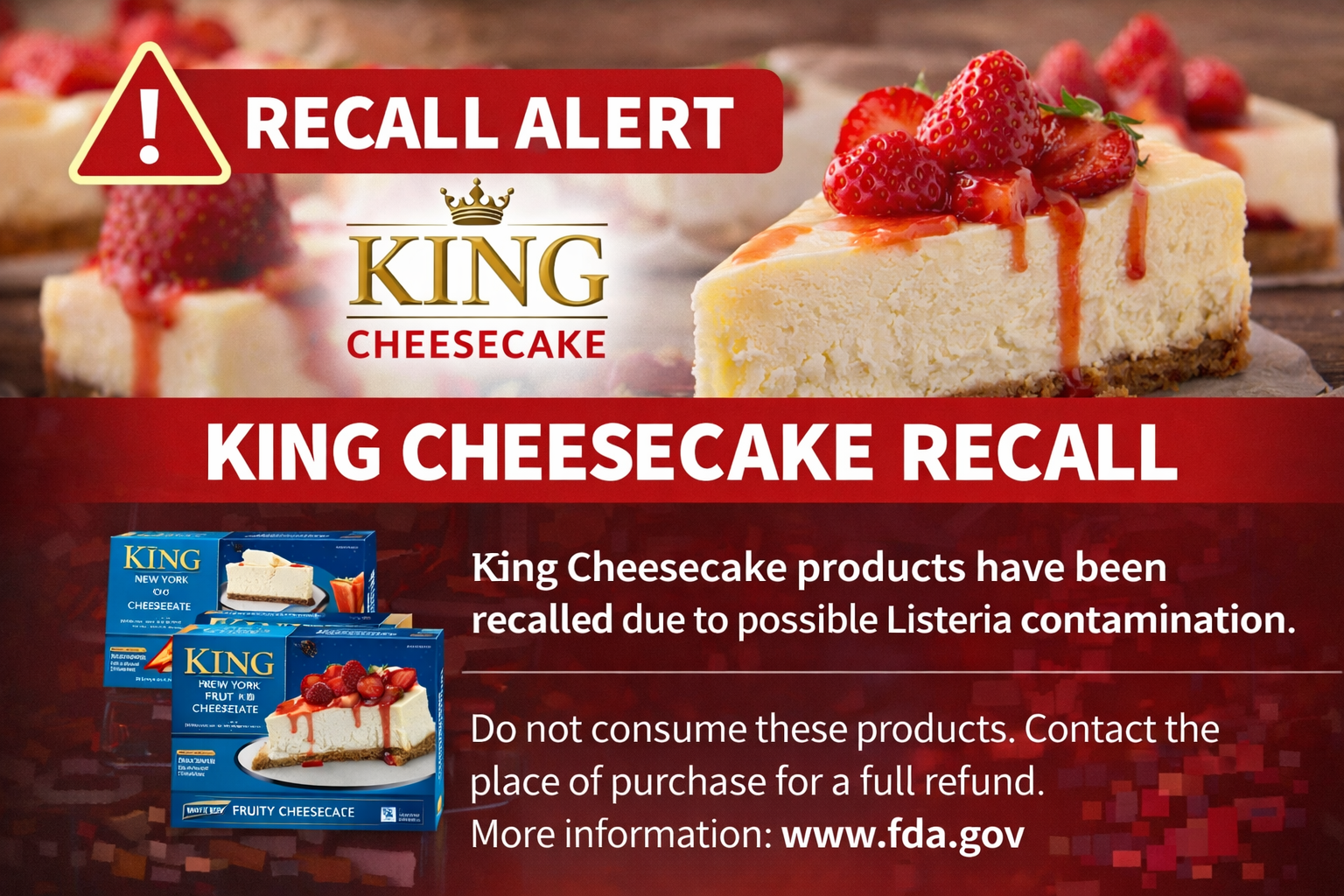
In the summer of 2025, one of the United States’ well‑known cake and dessert producers, King Cheesecake Company, Inc., faced a serious food‑safety crisis that prompted a wide consumer recall of several of its cake and cheesecake products. This event — now widely referred to as the “King Cheesecake recall” — sparked health warnings from the U.S. Food and Drug Administration (FDA) and became a major topic in food safety news. In this article, we explore what happened, why it matters, which products were involved, and what consumers need to know to stay safe.
Introduction to the King Cheesecake Recall
The King Cheesecake recall refers to a voluntary recall issued by King Cheesecake Company, Inc., a bakery company based in Houston, Texas, involving several of its cake and cheesecake products manufactured between late June and mid‑July 2025. The recall was initiated after concerns that pecans used in the products may have been contaminated with Salmonella, a bacterium that can cause severe food‑borne illness.
The U.S. Food and Drug Administration, after reviewing the situation, classified this recall as Class I, which is the most serious level of recall, indicating a “reasonable probability” that consuming the products could cause serious health consequences or even death.
Understanding the Health Hazard: Salmonella and Foodborne Illness
The primary concern behind the King Cheesecake recall was potential contamination with Salmonella bacteria — one of the most common causes of foodborne illness worldwide. Salmonella infections, known as salmonellosis, typically cause symptoms such as diarrhea, fever, and abdominal cramps. In most healthy adults, symptoms develop within 12–72 hours of consumption and usually subside within a week. However, in vulnerable groups such as young children, older adults, and people with weakened immune systems, the disease can be more severe and even life‑threatening.
When a product is contaminated with Salmonella, consuming it could lead to severe gastrointestinal distress, dehydration, and in rare cases, complications such as bloodstream infection or organ damage. The fact that the FDA classified the King Cheesecake recall as a Class I situation reflects the seriousness of this pathogen and the fact that the contaminated products were widely distributed across several states.
Timeline and Trigger of the King Cheesecake Recall
The timeline of this specific recall sheds light on how the issue came to public attention and why immediate action was necessary:
- June 20 to July 14, 2025: King Cheesecake Company manufactured a number of cakes and cheesecakes using pecans that were later suspected to be contaminated.
- July 18, 2025: The company initiated a voluntary recall of six products after internal safety testing raised concerns.
- August 7, 2025: The FDA formally upgraded the recall to Class I, the highest risk level for consumer products.
This sequence shows that the recall began before any official notification from the FDA court but was later backed by the agency’s most serious warning status once the potential public health risk was evaluated.
Products Affected in the King Cheesecake Recall
A key feature of the King Cheesecake recall involved the specific desserts that were recalled. The products spanned a mix of layered cakes and cheesecake varieties, all of which contained pecans or were suspected to have pecan‑contaminated ingredients. These included:
- Italian Layer Cake – Item #1071
- Carrot Layer Cake – Item #1312
- Tres Leches Cheesecake – Item #99272
- Hummingbird Layer Cake – Item #3145
- Chocolate Tres Leches Cheesecake – Item #99273
- Assorted Layer Cake – Item #2485
All of these products were manufactured during the same timeframe and distributed to retail stores in several U.S. states, including Alabama, Texas, Florida, Louisiana, Oklahoma, and Illinois.
These products were sold at regular retail outlets, meaning consumers may have purchased them without realizing they were part of a broader recall. The categories also show that it was not just “cheesecake” items that were affected but a variety of multi‑layered dessert products popular with consumers.
Consumer Safety Advice During the King Cheesecake Recall
As part of the King Cheesecake recall, health officials and the FDA provided several practical recommendations for consumers who may have purchased or consumed the recalled products:
- Do Not Eat the Recalled Products – If you purchased any of the affected cakes or cheesecakes, you should not consume them to avoid risk of Salmonella exposure.
- Dispose or Return Safely – Consumers were advised to throw the recalled items away by sealing them in a disposable container or to return them to the store for a refund.
- Monitor for Symptoms – Anyone who has eaten the recalled desserts should watch for salmonellosis symptoms — such as diarrhea, fever, or abdominal cramps — which can appear within several days of consumption. If symptoms develop, medical attention is advised.
- Sanitize Surfaces – To prevent cross‑contamination, clean any surfaces that may have touched the recalled products, such as refrigerator shelves or utensils.
These steps reflect standard public health guidance during food recalls, especially when bacterial contamination is suspected.
Geographic Distribution of the Affected King Cheesecake Products
One of the concerning features of the King Cheesecake recall was the wide distribution across multiple U.S. states. Recalled products reached several major markets, meaning that a broad range of consumers may be affected. States that received these products included:
- Alabama
- Texas
- Florida
- Louisiana
- Oklahoma
- Illinois
The fact that the products were distributed in such a diversified footprint raised public health concern, as Salmonella infection is not limited by state boundaries. With products on store shelves across the southern and central U.S., ensuring consumer safety required immediate action and understanding of potential risk.
Why the King Cheesecake Recall Matters: Public Health Implications
Food recalls are not unusual, but a Class I recall — the category assigned in the King Cheesecake recall — is relatively rare and serious. This level means that public health officials believe there is a real risk of severe illness or death if the product is consumed.
Salmonella infections can cause significant illness, and while many people recover without major complication, others may experience severe outcomes. Vulnerable populations, such as young children, elderly individuals, and people with immune disorders, face the highest risk. Officials stress that caution — including disposing of the product — is essential even if illness has not yet been reported in connection with the recall.
How the King Cheesecake Company Responded
In response to the recall concerns, the King Cheesecake Company, Inc. acted voluntarily to remove affected products from the market. A voluntary recall indicates that the company — in consultation with FDA guidance — chose to pull products to protect consumers rather than waiting for mandatory regulatory action.
Although the company did not immediately announce any reports of illnesses tied directly to the recalled products, internal testing suggested that the pecans may have been contaminated. This proactive step helped avoid further consumer exposure while public health investigations continued.
Food Safety and Industry Lessons from the King Cheesecake Recall
The King Cheesecake recall highlights several broader food safety lessons for manufacturers, retailers, and consumers:
- Ingredient Tracking Matters – Contaminated ingredients — even those used in small quantities like pecans — can lead to widespread recalls when included in multiple products.
- Internal Testing and Vigilance – Routine testing and quality control are essential to catch contamination before it becomes a larger public health issue.
- Health Communication – Rapid consumer communication and proper labeling help customers identify affected products and take appropriate action.
When a company experiences a recall event like this, it often leads to improved safety protocols and changes designed to prevent similar problems in the future.
Consumer Awareness: What to Do if You Think You Have a Recalled King Cheesecake Product
If you believe you have purchased an item affected by the King Cheesecake recall, it’s important to act responsibly:
- Check Product Details – Compare item names, numbers, and manufacturing dates with those listed in recall notices.
- Do Not Consume – If your product matches, do not eat it. Salmonella can pose a serious risk, even if no symptoms have yet appeared.
- Dispose or Return – Safely dispose of the item or return it to the place of purchase for a refund.
- Watch for Symptoms – Monitor for gastrointestinal illness after potential exposure and seek medical attention if needed.
Taking these precautions can protect your health and prevent accidentally exposing others to potentially contaminated products.
Comparisons: King Cheesecake Recall and Other Food Recalls
Although the King Cheesecake recall was notable, it is part of a broader pattern of food safety alerts involving desserts and other products. For example, in early 2025, a different cheesecake product — the Favorite Day Gourmet New York‑Style Cheesecake sold at Target stores — was recalled due to undeclared pecans that posed a risk to people with tree‑nut allergies.
While that recall was driven by allergen concerns and not Salmonella contamination, both incidents highlight how dessert products can present health risks if ingredients are compromised, mislabeled, or contaminated.
Conclusion: The Legacy of the King Cheesecake Recall
The King Cheesecake recall stands as a reminder of the importance of rigorous food safety practices at every stage of production and distribution. Even beloved dessert brands like King Cheesecake are not immune to the complex challenges of modern food manufacturing, where an issue with a single ingredient — such as pecans — can affect entire product lines and national consumer health.
Understanding the risks, responding quickly when problems are identified, and educating consumers is key to preventing illnesses and maintaining trust in the food system. Although no widespread illnesses were immediately reported in connection with this recall, the FDA’s classification of the event as Class I underscores how seriously public health officials took the potential risk.
For consumers, awareness of recalls, reading product labels carefully, and following official advice remain essential habits for food safety in everyday life.
READ MORE: TECHBIZZ.CO.UK
